
Peptide Therapy in the Tri-Cities
Peptide Therapy in the Tri-Cities
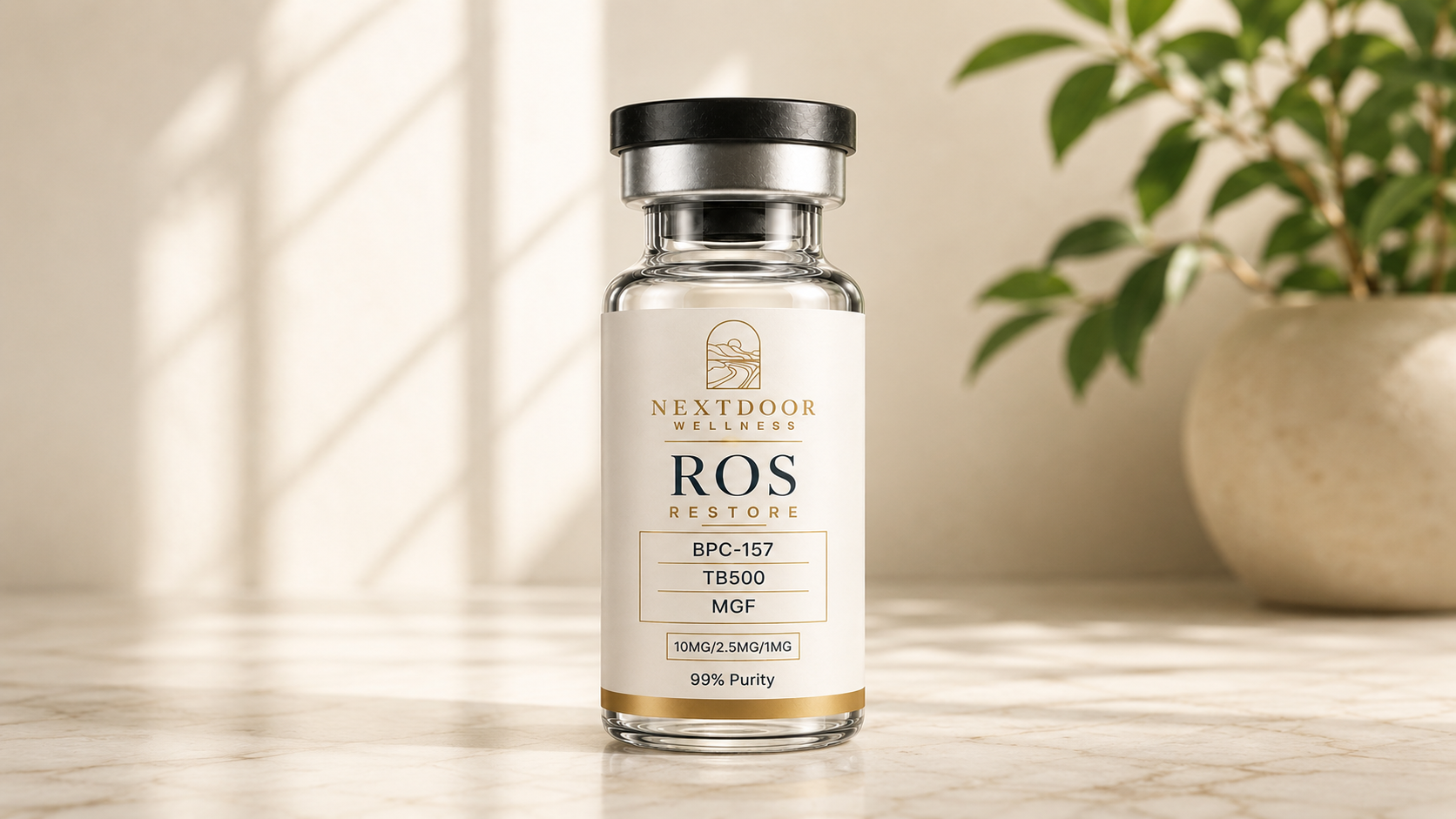
Peptide therapy, at its core, is the medical use of short chains of amino acids called peptides to influence specific biological pathways in the body. Because peptides occur naturally in human physiology as signaling molecules, hormones, and repair factors, researchers have spent decades studying how synthetic or bioidentical peptides might support processes such as tissue repair, inflammation modulation, metabolic regulation, and cellular communication.
Peptide therapy has become one of the most talked about tools in modern wellness, especially for individuals exploring recovery, performance, and healthy aging. At NextDoor Wellness in Pasco, WA, we believe in providing clear, responsible, evidence‑based education—especially when discussing investigational therapies such as BPC‑157, TB‑500, and MGF. These peptides are not FDA‑approved, and current research comes primarily from animal and cell studies, but the scientific literature offers meaningful insight into how they work biologically and why they have gained attention.
What Exactly Are Peptides?
Peptides are short chains of amino acids, the same building blocks that make up proteins. While proteins can be thousands of amino acids long, peptides are much smaller—often between 2 and 50 amino acids.
Their size allows them to act as highly targeted signaling molecules, sending instructions to cells that regulate essential biological functions such as:
- Tissue repair
- Hormone production
- Immune activity
- Metabolism
- Inflammation
- Neurological signaling
Because peptides occur naturally in the body, scientists have spent decades studying how synthetic or bioidentical peptides might influence these pathways. This research has led to growing interest in peptide therapy as a potential tool for supporting wellness, recovery, and healthy aging.

Why Are People Interested in Peptide Therapy?
Research into peptides spans a wide range of biological functions. Depending on the specific compound, researchers have investigated peptides in areas such as metabolic health, body composition, hormone signaling, tissue repair, recovery, immune function, sexual health, cognitive function and healthy aging.
The important distinction is that the amount and quality of evidence varies considerably from one peptide to another. A biological mechanism or promising early study does not necessarily establish that a treatment is safe or effective in humans.
Recovery & Tissue Health
One of the most discussed areas of peptide research involves tissue signaling, inflammation and recovery. Compounds such as BPC-157 and TB-500 have attracted considerable attention in wellness and performance communities.
However, these compounds should not be marketed as proven injury-healing treatments. FDA has stated that it lacks sufficient human safety information for BPC-157 and TB-500-related substances, and both were recently evaluated by an FDA advisory committee in connection with proposed compounding uses.
Metabolic Health & Body Composition
Certain peptide pathways are involved in appetite, metabolism, growth-hormone signaling and body composition. This has made metabolic health one of the most active areas of peptide-related medicine.
Treatment selection should depend on the patient's medical history, goals, laboratory findings when appropriate, and the evidence supporting the specific medication—not simply whether something is described as a "peptide."
For example, tesamorelin is an FDA-approved peptide medication, but its approved indication is specifically for reducing excess abdominal fat in adults with HIV-associated lipodystrophy; FDA labeling explicitly states that it is not indicated for weight-loss management.
Hormone & Healthy-Aging Goals
Peptides that interact with hormone-signaling pathways are also being studied and discussed for areas involving growth hormone, reproductive hormones, body composition and age-related changes.
At NextDoor Wellness, these concerns should be evaluated as part of the patient's overall hormonal and metabolic health rather than assuming that peptide therapy is automatically the appropriate treatment.
Skin & Aesthetic Wellness
Peptides also play roles in collagen signaling and other processes associated with skin structure and tissue health. This has led to their growing use and investigation in aesthetic medicine, skincare and healthy-aging research.
For patients interested in aesthetic wellness, peptide-related therapies may be discussed alongside established treatments and an individualized skincare or aesthetic plan.
Sexual Wellness
Some peptide-based therapies have been studied for aspects of sexual function and desire. Because sexual health can also be affected by hormones, medications, cardiovascular health, stress and other medical conditions, a proper evaluation is important before determining the appropriate treatment strategy.
The NextDoor Wellness Approach
At NextDoor Wellness, the goal is not to chase the newest wellness trend. Our goal is to help patients understand their options and determine what makes sense for their individual health goals.
Take the First Step Today
📍 5908 Bedford St Suite A, Pasco, WA 99301
🕒 Mon–Fri: 8AM–5PM
📞 +1 509-537-1971
Schedule a consultation today.
Share This Post
Recent Posts